


The Hidden Legend of Hoi An’s Iconic Bridge
Hoi An is a town where time seems to slow down. Lantern-lit streets, yellow-walled houses, and the gentle flow of the Thu Bon River create an atmosphere unlike anywhere else in Vietnam. Among its many cultural treasures, one structure stands as the soul of the old town — the Japanese Covered Bridge, known locally as Chùa Cầu.
At first glance, it may look like a charming old bridge, perfect for photos and quiet walks. But beneath its weathered wood and curved roof lies a hidden legend passed down through generations — a story that blends myth, history, and spiritual belief. To truly understand Hoi An, one must first understand the legend of its most iconic bridge.
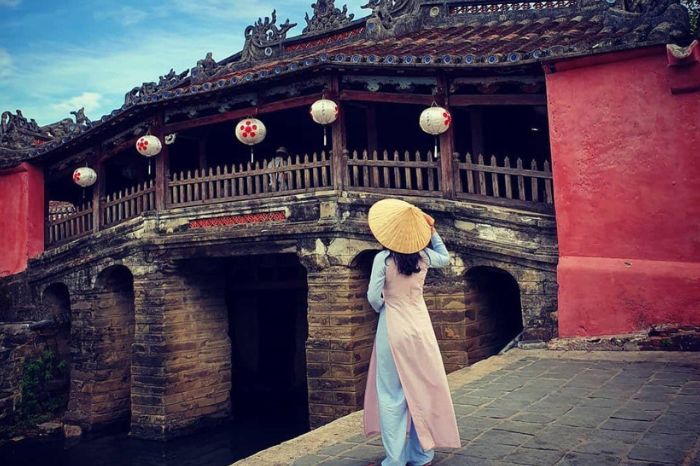
Hoi An’s Iconic Bridge in an Ancient Trading Port
Hoi An flourished between the 16th and 18th centuries as one of Southeast Asia’s most important trading ports. Merchants from Japan, China, and Europe arrived by sea, bringing not only goods but also cultural traditions, beliefs, and architectural influences.
During this golden age, the Japanese community settled in a district separated from the Chinese quarters by a small canal. To connect the neighborhoods, Japanese merchants constructed a covered wooden bridge around the early 1600s. More than a simple crossing, the bridge became a symbol of unity, harmony, and cultural exchange.
Yet the bridge was never meant to be merely practical. According to legend, it was built for a much deeper reason.
The Myth of the Sleeping Monster
Local folklore tells of a giant mythical creature known as Namazu — a catfish-like monster believed to live beneath the land. Its head rested in India, its body stretched across Southeast Asia, and its tail reached Japan.
Whenever Namazu stirred, earthquakes, floods, and natural disasters followed. People believed that the central region of Vietnam, including Hoi An, lay directly over the creature’s heart — the most dangerous point of all.
To protect the town and calm the monster, Japanese merchants decided to build a sacred structure. The Japanese Covered Bridge was designed not only as a physical connection between communities but also as a spiritual seal — a symbolic nail driven into Namazu’s heart to prevent further destruction.
This belief transformed the bridge into a spiritual guardian, watching over Hoi An and preserving its peace.
Architecture with Meaning
Every detail of Chùa Cầu carries symbolic significance. The roof reflects traditional Japanese architecture, while later renovations added Vietnamese and Chinese elements, creating a rare architectural fusion.
Inside the bridge stands a small temple dedicated to Bắc Đế Trấn Võ, a Taoist deity believed to protect against natural disasters. This further reinforces the bridge’s spiritual role as a protector of the town.
At each end of the bridge, statues of monkeys and dogs stand guard. Some believe these animals represent the years when construction began and ended. Others see them as spiritual guardians warding off evil and misfortune.
Whether viewed through history, mythology, or faith, Chùa Cầu is far more than wood and stone — it is a living symbol of belief.
A Silent Witness to History
Over centuries, the Japanese Covered Bridge has endured floods, wars, and the passing of time. Though restored several times, it remains remarkably authentic, bearing the marks of age with quiet dignity.
Walking across the bridge today, visitors tread the same path once taken by ancient merchants, monks, and townspeople. The worn wooden planks whisper stories of prosperity, loss, and resilience.
In a rapidly changing world, Chùa Cầu stands as a reminder that heritage is not something frozen in the past — it is something lived, protected, and passed on.
Chùa Cầu in Modern Hoi An
Today, the bridge is the most photographed landmark in Hoi An. Yet many visitors pause only briefly, unaware of the legend beneath their feet. Those who take time to learn its story often leave with a deeper appreciation for the town’s spiritual and cultural depth.
Local residents still see Chùa Cầu as a symbol of balance — between land and water, people and nature, past and present. During festivals, the bridge and surrounding streets glow with lanterns, transforming the legend into a living, breathing experience.
Best Places to Visit in Hoi An at Night
As daylight fades, Hoi An reveals a completely different charm. Lanterns illuminate the old town, reflections dance on the river, and the air fills with music and laughter. If you want to fully experience the spirit of the bridge, night is the perfect time.
Some of the Best Places to Visit in Hoi An at Night include:
-
The Japanese Covered Bridge, softly lit and peaceful
-
Hoi An Night Market, vibrant with street food and handmade crafts
-
Thu Bon River, where lantern boats glide quietly across the water
-
Ancient streets around Nguyen Thai Hoc, alive with cafés and performances
Seeing Chùa Cầu at night feels almost mystical — as if the old legend awakens once more beneath the lantern light.
Getting to Hoi An: Travel Made Easy
Hoi An has no airport or train station, making overland travel the most popular option. Fortunately, the journey is part of the experience, offering scenic views and flexibility.
Many travelers choose a bus Da Nang to Hoi An, as Da Nang International Airport is only about 30 kilometers away. Buses run frequently, are affordable, and connect directly to the old town area.
For those traveling from the former imperial capital, the bus Hue to Hoi An is another convenient option. The route often passes through stunning coastal scenery and the famous Hai Van Pass.
If you prefer comfort and privacy, traveling from Hue to Hoi An by car allows you to stop along the way at beaches, lagoons, and viewpoints that buses often bypass.
Similarly, a private car Da Nang to Hoi An is ideal for families, small groups, or travelers with luggage. It offers door-to-door service, flexible schedules, and a more relaxed journey — perfect for those who value comfort and time.
Why the Journey Matters
Traveling to Hoi An is not just about reaching a destination. Whether you arrive by bus, private car, or scenic road, the journey sets the tone for your experience.
As you approach the old town, modern buildings slowly give way to tiled roofs, quiet streets, and lantern-lit alleys. By the time you reach Chùa Cầu, you are already stepping into another world — one shaped by centuries of belief, trade, and storytelling.
Preserving a Living Legend
The Japanese Covered Bridge has undergone careful restoration to ensure its survival for future generations. Preservation efforts focus not only on physical structure but also on maintaining the bridge’s cultural and spiritual meaning.
Visitors are encouraged to walk gently, respect local customs, and take time to learn the story behind the site. In doing so, they become part of the bridge’s ongoing legend.
More Than a Bridge
Chùa Cầu is not simply an architectural landmark or a tourist attraction. It is a story carved in wood, a belief passed through centuries, and a symbol of harmony between cultures.
To stand on the bridge at dawn, with the town still asleep, or at night beneath glowing lanterns, is to feel the quiet power of history and myth intertwined.
Hoi An may enchant visitors with its beauty, but it is the hidden legend of its iconic bridge that leaves a lasting impression — one that lingers long after the journey ends.
✨ If you visit Hoi An, do more than take a photo of Chùa Cầu. Listen to its story. Walk slowly. Feel the weight of centuries beneath your feet.
Because some bridges are not just meant to be crossed – they are meant to be understood.
Same category

Best Way to Get to Hoi An from Da Nang: Private Car, Shuttle Bus or Taxi?
07/05/2026
Traveling between Da Nang and Hoi An is one of the most popular journeys in Central Vietnam. Whether...
See more
Biển – Núi – Thành phố: Bạn chọn gì cho dịp lễ 30/4 – 1/5 này?
30/04/2025
Lại một kỳ nghỉ 30/4 – 1/5 đang đến gần!Bạn đã quyết định sẽ đi đâu chưa? Biển xanh...
See more
Hoi An Discovery Tour: Explore Traditional Villages & The Peaceful Countryside of Central Vietnam
14/05/2026
Discover the Hidden Beauty of Hoi An When travelers think about Hoi An, they often imagine lantern-lit streets,...
See more
Di tích Thành Trà Kiệu – Di sản và tương lai của vùng đất Chăm Pa
15/01/2026
Trong dòng chảy ngàn năm của lịch sử dân tộc Việt Nam, dải đất Quảng Nam (cũ) nay...
See more